
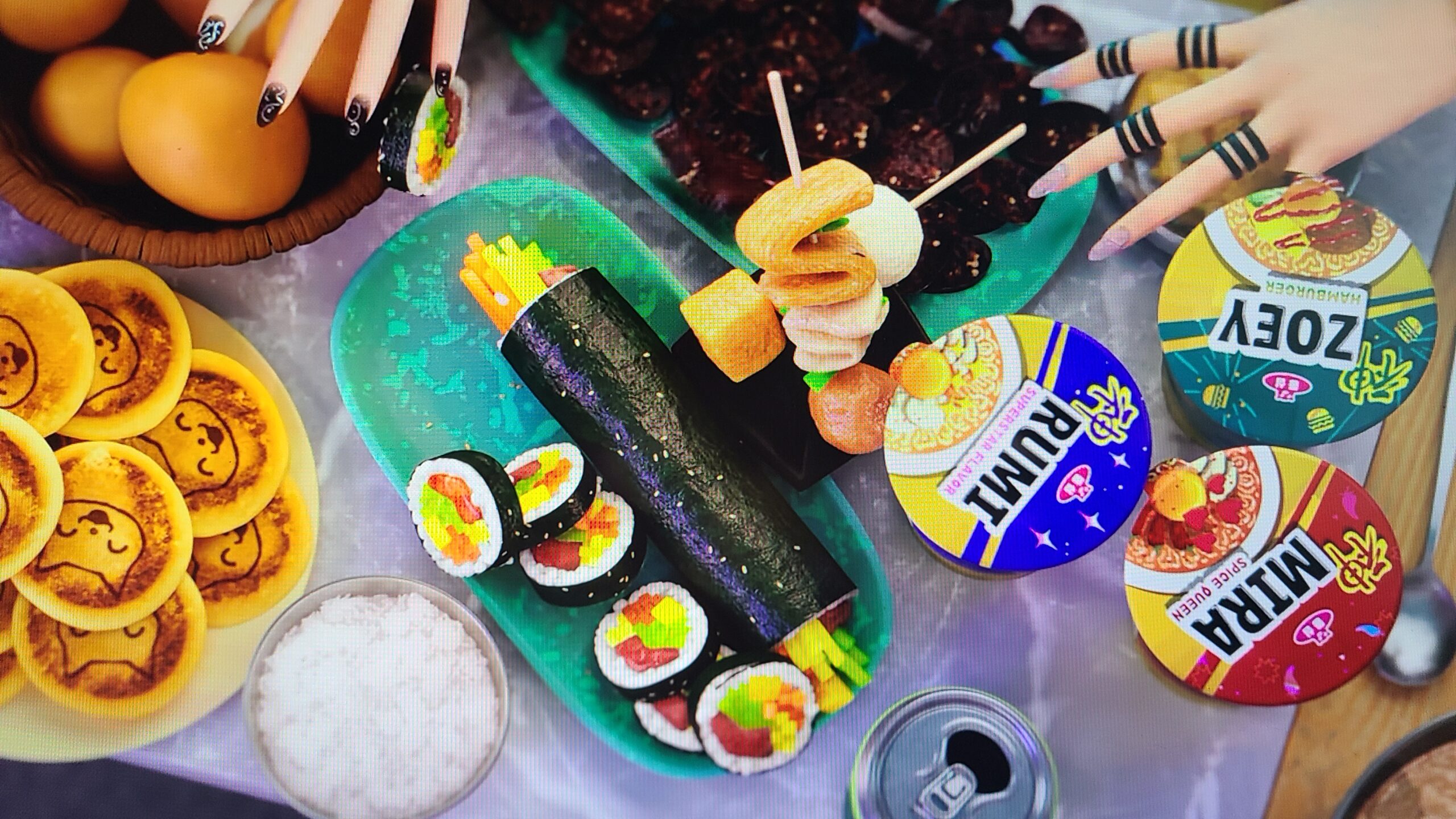
Have you watched Netflix’s latest animated sensation K-Pop Demon Hunters? I binged the entire series and absolutely loved it! While the premise of K-pop idols fighting demons was refreshingly unique, what really caught my attention as a Korean local were the authentic K-foods scattered throughout every episode.
The show’s popularity has sparked a global phenomenon – Rumi’s whole kimbap eating scene became the viral “Kimbap Challenge,” and international fans are now planning entire “K-food tours” just to taste what the Huntrix members were eating. The cultural impact has been incredible to witness!
So I decided to create the ultimate guide for curious international viewers. As someone who grew up eating these foods, I’ll break down every Korean dish featured in the series, explain how we actually eat them in real life, and share insider tips you won’t find in typical travel guides.
1. The Viral Star: Kimbap (김밥)
🎬 The Anime Scene The most talked-about food moment has to be leader Rumi devouring an entire uncut kimbap roll in one massive bite after practice. This single scene launched thousands of “Kimbap Challenge” videos across social media platforms worldwide.

🇰🇷 What Koreans Actually Know Kimbap is seasoned rice rolled in dried seaweed sheets (gim) with various fillings like pickled radish, ham, egg, spinach, carrots, and marinated burdock root. Think of it as Korea’s answer to sushi rolls, but with completely different flavors and no raw fish. For Koreans, kimbap represents childhood memories – the lovingly packed lunch your mom made for school trips and the go-to convenience food for busy days.
Here’s the reality check: nobody actually eats kimbap like Rumi did! While the challenge looks fun, trying to stuff an entire roll in your mouth makes it impossible to taste the delicate balance of flavors. We always slice it into neat 1-2 cm rounds.

💡 Local Pro Tips:
- Hunt for the “tail ends” (꼬다리): The slightly messy end pieces where ingredients peek out are actually the most coveted parts – less rice, more filling!
- The golden combo: Order kimbap with tteokbokki (spicy rice cakes). Dipping the savory kimbap in that sweet-spicy sauce is a match made in heaven.
- Variety is key: Try different types like chamchi-kimbap (tuna-mayo), bulgogi-kimbap (Korean beef), or cheese-kimbap. Share multiple types with friends for the full experience.
2. 3-Minute Magic: Cup Ramyeon (컵라면)
🎬 The Anime Scene
The Huntrix members casually enjoying cup noodles in their dorm perfectly captured Korean convenience culture. The “Shin Ramyeon” lettering on the cups was a nice touch that Korean viewers immediately recognized, and the “pour water and wait 3 minutes” dialogue nailed the essential cup ramyeon experience.

🇰🇷 What Koreans Actually Know Cup ramyeon is our ultimate convenience food – dried noodles and soup powder in a styrofoam cup, ready in minutes with just hot water. It’s the faithful companion of students, office workers, and gamers pulling all-nighters at PC bangs (internet cafes). The slightly undercooked, chewy texture is actually part of cup ramyeon’s unique appeal – it’s different from pot-cooked instant noodles and we love it that way.
💡 Local Pro Tips:
- The holy trinity: Cup ramyeon + triangle kimbap + kimchi. This combination is basically the unofficial meal of convenience stores across Korea. The kimchi cuts through the sodium while the triangle kimbap makes it filling enough for a proper meal.
- Lid plate trick: Fold the aluminum lid into a small plate. Perfect for cooling down bites and sharing with friends.
- Microwave upgrade: Many newer cup ramyeon brands are microwave-safe. Following the microwave instructions instead of just adding hot water gives you chewier noodles and richer broth flavors.
- Night market essential: At Korean night markets, vendors often sell cup ramyeon with added vegetables, eggs, or cheese – turning simple instant noodles into a gourmet experience.
🚩 Not Just Instant: Seoul’s Top Gourmet Ramyeon Joints
3. Soul-Warming Comfort: Seolleongtang (설렁탕)
🎬 The Anime Scene When Rumi was struggling with her high notes, the team visited a restaurant for seolleongtang – the director specifically called it “Korean healing food.” The scene perfectly captured the milky white broth, green onion garnish, and those classic green melamine bowls you’ll find in every Seoul seolleongtang restaurant.


🇰🇷 What Koreans Actually Know
Seolleongtang is beef bone soup, slow-cooked for hours until the broth turns milky white. First-time visitors often think “this tastes like nothing” because the broth is incredibly mild. That’s intentional! You’re supposed to season it yourself with salt, pepper, and chopped scallions at the table. It’s comfort food that fills your belly and warms your soul – the kind of meal that makes everything feel better.

💡 Local Pro Tips:
- Secret ingredient: Add 2-3 spoonfuls of kkakdugi (cubed radish kimchi) juice to your broth. The slight tang and fermented flavor transforms the entire soup experience.
- Rice strategy: Only add half a bowl of rice at a time. Adding too much at once turns your soup into porridge by the end.
- Noodle etiquette: Most seolleongtang comes with thin somyeon noodles at the bottom. Slurp these first before adding your rice.
- Perfect for hangovers: Koreans swear by seolleongtang for hangover recovery – the simple, nourishing broth is exactly what your stomach needs after a night out.
🚩 Where Locals Go: The Best Seollongtang Restaurants in Korea
4. Winter Street Food Magic: Hotteok (호떡)
🎬 The Anime Scene
Hotteok appeared briefly as street food in the series, but it perfectly represents Korean winter vibes – those round, flat pancakes sizzling on street cart griddles.
🇰🇷 What Koreans Actually Know Hotteok is Korea’s ultimate winter street snack. Sweet dough filled with brown sugar, cinnamon, and nuts, then pressed flat and pan-fried until crispy outside and gooey inside. One bite releases a stream of molten sugar syrup that’s dangerously hot but absolutely irresistible. The smell of hotteok cooking is impossible to walk past on a cold Korean winter day.

💡 Local Pro Tips:
- Burn alert!: Seriously, the sugar filling is like lava. Take small bites from the edges and let it cool down. Korean street food veterans have all learned this lesson the hard way.
- Seed hotteok hunt: In Busan, look for “ssi-hotteok” (seed hotteok) – they split the pancake open and stuff it with sunflower seeds, pumpkin seeds, and nuts for extra crunch and nutty flavor.
- Savory alternatives: Not into sweets? Try “yasai hotteok” filled with glass noodles and vegetables, or “pizza hotteok” with cheese and vegetables.
- Peak season: December through February is prime hotteok season. Summer hotteok exists but it’s just not the same without the cold air contrast.
5. Love It or Leave It: Sundae (순대)
🎬 The Anime Scene Sundae appeared alongside other Korean street foods as typical pojangmacha (food cart) fare, representing authentic Korean comfort eating.

🇰🇷 What Koreans Actually Know
Sundae is Korean blood sausage – pig intestines stuffed with glutinous rice, vegetables, blood, and glass noodles, then steamed. I know the blood part sounds intimidating to international visitors, but the actual taste is savory, earthy, and surprisingly mild. The texture is chewy and satisfying. At street food stalls, you’ll usually get the “mixed” version with glass noodles, while specialty sundae restaurants serve more traditional versions with more organ meat and blood.
💡 Local Pro Tips:
- Regional dipping styles: Koreans eat sundae differently by region. Seoul/Gyeonggi uses salt and pepper, Chungcheong prefers salted shrimp, Gyeongsang regions use ssamjang (spicy bean paste), and Jeolla sometimes uses vinegar sauce.
- Order “mixed”: Ask for “naejang seokeo juseyo” (mix in some organs) to try different textures – chewy liver, soft lung, and other parts that each have unique flavors.
- Upgrade options: Try sundae-bokkeum (stir-fried sundae with vegetables) or sundae-guk (sundae soup) for completely different preparations that might suit your taste better.
6. Summer Soul Food: Naengmyeon (냉면)
🎬 The Anime Scene The directors gave naengmyeon special significance in the series, as both directors have North Korean heritage, making this dish deeply personal and symbolic for their families.

🇰🇷 What Koreans Actually Know Naengmyeon means “cold noodles” and comes in two main styles. Pyeongyang-style (mul-naengmyeon) features buckwheat noodles in clear, cold broth that’s refreshing and clean-tasting. Hamhung-style (bibim-naengmyeon) uses potato starch noodles mixed with spicy-sweet sauce. Historically, this was winter food eaten in heated rooms, but modern Koreans love it as summer cooling food.
💡 Local Pro Tips:
- Vinegar and mustard: Always taste the broth first, then add vinegar and Korean mustard sauce gradually to your preference. Too much overwhelms the delicate flavors.
- After-BBQ tradition: Korean BBQ restaurants serve naengmyeon as a finishing dish. The cold, refreshing noodles cleanse your palate after rich, grilled meat.
- Egg strategy: Eat the hard-boiled egg garnish first – it protects your stomach from cold noodles and spicy sauce.
- Noodle cutting: Don’t be embarrassed to ask for scissors! Naengmyeon noodles are intentionally long, and cutting them makes eating much easier.
7. K-Dessert Rising Star: Yakgwa (약과)
🎬 The Anime Scene
While not directly featured in K-Pop Demon Hunters, yakgwa represents the traditional Korean sweets experiencing a massive revival thanks to K-culture’s global influence.

🇰🇷 What Koreans Actually Know Yakgwa is traditional Korean pastry made from wheat flour mixed with honey, sesame oil, and ginger, then deep-fried and soaked in syrup. The result is chewy, dense, and mildly sweet with complex flavors. Once considered “grandma food,” yakgwa has exploded among younger generations as part of the “halmae-nial” (grandma + millennial) trend, becoming Korea’s trendy traditional dessert.
💡 Local Pro Tips:
- Coffee pairing: Yakgwa and americano are a perfect match – the bitter coffee balances the dense sweetness beautifully.
- Frozen treat: Try freezing yakgwa for a firmer texture that doesn’t stick to your teeth as much.
- Fusion hunting: Look for modern interpretations like yakgwa cookies, yakgwa ice cream, or yakgwa financiers at trendy Korean cafes.
- Quality matters: Traditional yakgwa should have visible honey crystals and layers – avoid overly uniform, mass-produced versions.
🚩 Discovering Authentic Korean Rice Cakes (Tteok) and Honey Cookies (Yakgwa)
🌟 Overall Food Experience Rating
Individual Food Ratings:
- Kimbap: ⭐⭐⭐⭐⭐ (5/5) – Foolproof delicious, endless variety, perfect for any time
- Cup Ramyeon: ⭐⭐⭐⭐☆ (4/5) – Quick satisfaction, but don’t make it your daily meal
- Seolleongtang: ⭐⭐⭐⭐☆ (4/5) – Comforting and filling, though the mild flavor takes adjustment
- Hotteok: ⭐⭐⭐⭐⭐ (5/5) – Pure winter joy in pancake form – I’ve never met anyone who dislikes it
- Sundae: ⭐⭐⭐☆☆ (3/5) – Unique and flavorful, but definitely an acquired taste for international palates
- Naengmyeon: ⭐⭐⭐⭐☆ (4/5) – Summer perfection, especially after Korean BBQ
- Yakgwa: ⭐⭐⭐⭐☆ (4/5) – Sophisticated traditional sweetness that pairs amazingly with coffee
Thanks to K-Pop Demon Hunters, these Korean foods are getting the international recognition they deserve. From simple street snacks to hearty comfort meals, each dish tells part of Korea’s culinary story. Following in the Huntrix members’ footsteps will definitely make your Korean food adventure more delicious and meaningful.
Getting These Foods in Korea:
- Budget range: ₩1,000-15,000 per dish ($0.75-11 USD)
- Where to find: Convenience stores (cup ramyeon, kimbap), street food markets (hotteok, sundae), traditional restaurants (seolleongtang, naengmyeon), modern cafes (yakgwa)
- Tourist-friendly areas: Myeongdong, Hongdae, Insadong all have authentic versions of these foods with English menus available